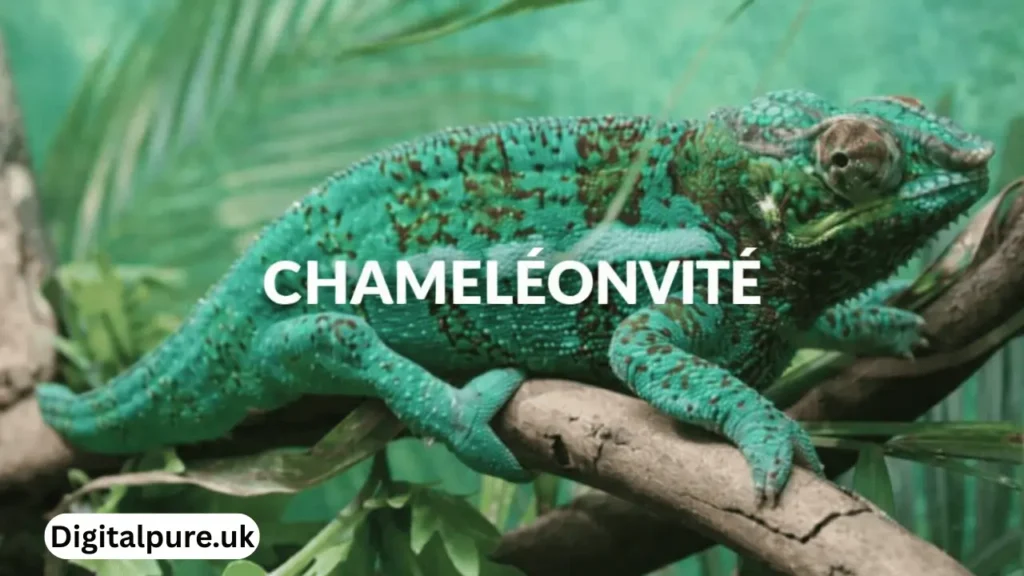

Introduction
People love to reduce chameleónovité to a party trick: the animal that changes color to match its background. That idea is not just incomplete—it’s misleading. These reptiles operate with a level of biological precision and behavioral nuance that most animals don’t even come close to. If you’re writing them off as slow, decorative lizards, you’re missing the entire point.
The anatomy of control, not just adaptation
The real story of chameleónovité starts with control. Every defining trait they have is about precision rather than survival by chance.
Take their eyes. Each eye moves independently, scanning different directions at the same time. That’s not a gimmick—it’s a surveillance system. A chameleon can monitor threats behind it while locking onto prey in front. Then, within seconds, both eyes synchronize to calculate depth before a strike.
Their feet are just as intentional. Zygodactyl grips allow chameleónovité to clamp onto branches with a vice-like hold. Add a prehensile tail, and you get an animal that doesn’t just sit in trees—it anchors itself like a living clamp.
Nothing about their body is accidental. It’s engineered for stability, patience, and sudden action.
Color change is communication, not camouflage
The obsession with camouflage has overshadowed what actually matters. Chameleónovité do change color, but not primarily to disappear. They use color to communicate.
A dominant male doesn’t hide—he displays. Bright, contrasting colors signal strength and territory. A stressed chameleon darkens. A calm one shows softer tones. Temperature also plays a role; darker colors absorb more heat when needed.
What’s happening under the skin is even more fascinating. Layers of specialized cells manipulate light reflection, not just pigment. That means chameleónovité aren’t simply “switching colors”—they’re actively controlling how light interacts with their skin.
So no, they’re not blending into every background like a sci-fi illusion. They’re broadcasting signals constantly, whether we notice or not.
The tongue: one of the fastest mechanisms in the animal world
If there’s one feature that deserves more attention, it’s the tongue. Chameleónovité possess one of the most efficient hunting tools in nature.
The tongue can extend beyond the length of the body and snap forward in a fraction of a second. The acceleration is extreme—far beyond what most vertebrates can achieve. And it’s not just speed; it’s accuracy.
The tip is sticky, muscular, and shaped to grip prey instantly. There’s no second attempt. Either the strike works, or the opportunity is gone.
This is why chameleónovité don’t chase. They don’t need to. They wait, calculate, and execute.
Movement that looks slow—but isn’t careless
At a glance, chameleónovité seem sluggish. They sway, pause, and creep forward in an almost exaggerated manner. It looks hesitant.
It isn’t.
That swaying mimics leaves moving in the wind. It’s a defensive illusion that reduces detection by both predators and prey. Every step is deliberate. Every pause is strategic.
Speed, in their case, would be a disadvantage. Their survival depends on not being noticed until it’s too late.
Where chameleónovité actually thrive
Most people associate chameleónovité with dense jungles, but their range is broader than expected. They dominate in Madagascar, but they also live across mainland Africa, parts of southern Europe, and sections of Asia.
What matters isn’t the location—it’s the structure of the environment.
They prefer vertical complexity. Trees, shrubs, and layered vegetation give them the space to climb, hide, and hunt. Even species that live in drier regions rely on low vegetation rather than open ground.
Put a chameleon in a flat, exposed landscape, and its entire system falls apart.
Diet and the discipline of waiting
Chameleónovité are strict opportunists. They don’t waste energy chasing food. Instead, they rely on positioning and timing.
Insects make up the bulk of their diet—crickets, flies, grasshoppers. Larger species go further, occasionally taking small birds or other reptiles.
But the method stays the same: stillness first, strike second.
This approach is energy-efficient, but it also demands precision. A missed strike isn’t just a mistake—it’s a lost investment of time and energy.
Solitary by design, not by accident
Unlike social reptiles, chameleónovité don’t tolerate company well. They are territorial, especially males. Encounters are not casual—they’re confrontational.
Color plays a major role here. A male will display intense patterns to assert dominance. If the opponent doesn’t back down, escalation follows.
Even outside of conflict, they prefer isolation. There’s no benefit in sharing space when resources are limited and competition is high.
This solitary behavior isn’t a flaw—it’s a strategy.
Reproduction is more varied than expected
Reproductive strategies among chameleónovité are surprisingly diverse. Some lay eggs in carefully selected soil, burying them and leaving them to develop over months. Others give birth to live young.
The incubation period for eggs can stretch close to a year depending on species and conditions. That’s a long investment with no guarantee of survival.
Live-bearing species skip that risk but carry the burden internally instead.
Either way, the approach reflects the same pattern seen across chameleónovité: controlled risk, not reckless reproduction.
The problem with keeping chameleónovité as pets
Here’s where things get uncomfortable. Chameleónovité are often sold as exotic pets, but most people underestimate how demanding they are.
They require precise humidity, temperature gradients, UV exposure, and vertical space. Miss any of these, and their health declines quickly.
Stress is another issue. These animals don’t adapt well to handling or frequent interaction. What looks like a calm pet is often a stressed one.
The result? High mortality rates in captivity, especially among inexperienced owners.
If there’s one point worth being blunt about, it’s this: chameleónovité are not beginner pets.
Conservation pressure is quietly increasing
Habitat loss is the biggest threat facing chameleónovité. Deforestation removes the layered environments they depend on. Once those structures disappear, relocation isn’t simple.
The pet trade adds another layer of pressure. Wild populations are still being harvested in certain regions, often without sustainable practices.
Some species are already under serious threat, especially those with limited geographic ranges.
The irony is obvious. Animals known for blending in are disappearing in plain sight.
Why chameleónovité still fascinate—and why they should
There’s a reason chameleónovité keep showing up in documentaries, research, and conversations. They challenge assumptions.
They’re slow but precise. Visible yet hard to detect. Simple in appearance but complex in function.
They don’t rely on strength or speed. They rely on control.
And that’s what makes them worth paying attention to.
Conclusion
chameleónovité are not passive creatures drifting through trees—they are calculated, highly specialized survivors built on precision. The more closely you look, the more obvious it becomes that every trait they have serves a specific purpose. Ignore the myths, and what’s left is something far more interesting: an animal that succeeds not by overpowering its environment, but by mastering it.
FAQs
1. Why do chameleónovité sometimes turn very dark or almost black?
That usually signals stress, fear, or a need to absorb heat. It’s not random—there’s always a trigger behind the color shift.
2. Can chameleónovité see in complete darkness?
No. Their vision is excellent in daylight, but like most reptiles, they rely on light. Darkness limits their ability to hunt and navigate.
3. How accurate is a chameleon’s tongue strike?
Extremely accurate. Once both eyes lock onto a target, the strike is calculated with depth precision. Misses do happen, but rarely.
4. Do all chameleónovité live in trees?
Most do, but not all. Some species live in low shrubs or near ground vegetation, especially in drier environments.
5. Why do chameleónovité sway while walking?
It mimics leaves moving in the wind. This reduces detection by predators and helps them approach prey without being noticed.
You May Also Read: Wifekivers: The New Benchmark of Real Effort in Modern Relationships