
Introduction
The backlash wasn’t really about benches. It was about identity, and people noticed immediately when kilkee benches replaced plastic versions that felt out of place along a coastline built on memory and familiarity. What looked like a simple upgrade turned into a public argument about whether practical decisions should override character.
A coastal town that didn’t ask for a redesign
Kilkee has always leaned heavily on its seafront image. Visitors don’t come just for the water; they come for the feeling of continuity. The curved coastline, the walking paths, the benches facing the Atlantic—everything worked together.
That’s why the shift captured attention so quickly. When kilkee benches replaced plastic units started appearing, people didn’t see them as neutral infrastructure. They saw disruption.
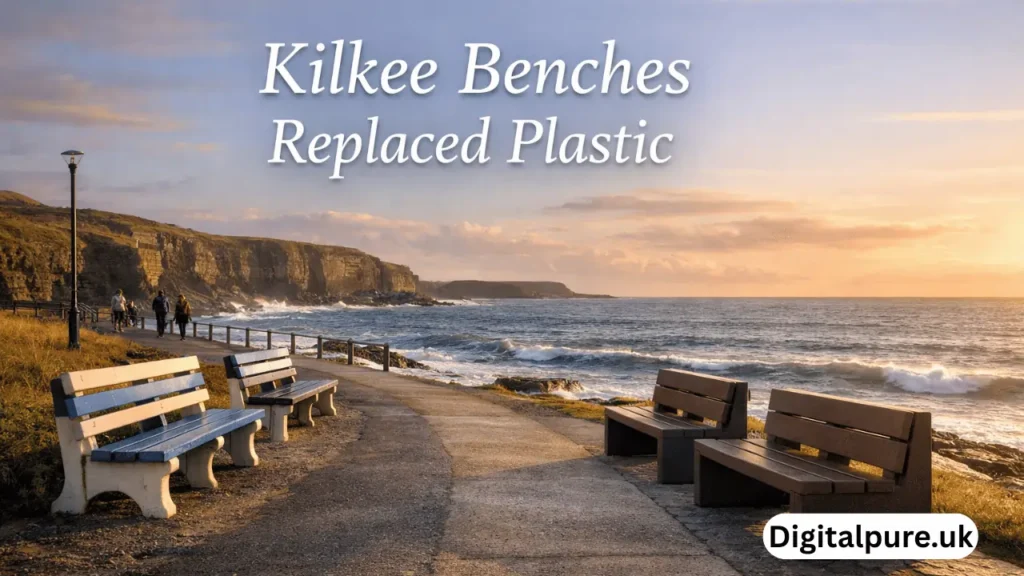
The original blue-and-white benches weren’t expensive design statements, but they had something more valuable: recognition. Locals associated them with place. Tourists associated them with photos, rest stops, and the rhythm of walking the coast.
Changing them changed the experience.
The reasoning that made sense on paper
Local authorities didn’t act randomly. There were practical concerns behind the move that led to kilkee benches replaced plastic installations.
Wood doesn’t age gracefully in coastal conditions. Salt air eats away at surfaces. Metal fixtures expand and weaken. Maintenance becomes a recurring cost rather than a one-time fix. Over time, repairs stop being efficient.
Recycled plastic benches offered a different promise. They don’t rot. They resist corrosion. They require far less upkeep. From a budget perspective, they look like a long-term win.
There’s also the environmental argument. Using recycled materials reduces waste and supports circular production. On paper, kilkee benches replaced plastic reads like a responsible step forward.
But towns aren’t spreadsheets.
Why people reacted so strongly
The strongest reactions weren’t about comfort or durability. They were emotional.
When kilkee benches replaced plastic versions, residents didn’t just see new seating—they saw a piece of the town’s personality removed without discussion. That’s where the frustration sharpened.
The color alone became a talking point. The old blue-and-white benches echoed local identity. The newer brown plastic benches felt generic, like they could belong anywhere.
And that’s the problem: “anywhere” is the opposite of what places like Kilkee rely on.
People described the new benches as out of sync with the surroundings. Not offensive, not unusable—just wrong. That quiet mismatch is often more irritating than an obvious mistake.
Heritage isn’t decorative, it’s functional
It’s easy to dismiss reactions as nostalgia. That’s a mistake.
Heritage in a town like Kilkee isn’t just aesthetic. It shapes how people interact with the place. The familiar look of the promenade creates continuity across generations. Grandparents, parents, and kids all recognize the same details.
When kilkee benches replaced plastic, that continuity took a hit.
Small design elements anchor memory. A bench isn’t just a seat—it’s where someone stops after a swim, where families sit during windy evenings, where visitors pause to take in the cliffs. Replace enough of those touchpoints and the place starts to feel unfamiliar, even if nothing else changes.
That’s why the reaction wasn’t mild.
The sustainability argument doesn’t automatically win
There’s a tendency to assume that environmentally friendly choices should be accepted without resistance. In theory, that’s reasonable. In practice, it doesn’t hold.
When kilkee benches replaced plastic seating became the reality, sustainability alone didn’t justify the change for many residents.
Recycled plastic is durable, but durability isn’t the only metric that matters. If a material improves lifespan but weakens the visual and cultural fabric of a place, the trade-off becomes complicated.
The real issue isn’t whether plastic benches are better than wooden ones. It’s whether they fit the setting.
A sustainable choice that ignores context can still feel like a downgrade.
The consultation gap that made things worse
The reaction might have been softer if people felt involved. They didn’t.
One of the biggest complaints tied to kilkee benches replaced plastic was the lack of visible consultation. Decisions appeared to happen quietly, then suddenly the old benches were gone.
That creates a sense of imposition. Even a well-reasoned decision can trigger backlash if people feel excluded from it.
Public infrastructure isn’t just about function. It’s about shared ownership. When that disappears, even small changes feel heavy-handed.
Comfort vs character isn’t a fair trade
Some visitors actually liked the new benches. They’re often wider. They can feel sturdier. For someone stopping briefly, the difference might seem minor or even positive.
But locals don’t experience the space in short bursts. They live with it.
When kilkee benches replaced plastic designs were introduced, the trade-off became clear: slightly improved durability and comfort versus a noticeable loss of character.
That’s not an equal exchange.
Comfort can be replicated. Character can’t.
Tourism quietly enters the conversation
Kilkee depends on visitors, whether officially acknowledged or not. And visitors respond to atmosphere more than infrastructure specs.
The old benches contributed to a visual identity that felt consistent with the town’s coastal charm. When kilkee benches replaced plastic seating, that visual rhythm shifted.
Tourists may not articulate it directly, but they notice when a place feels less distinct. Photos change. Impressions change. Over time, those subtle shifts matter.
No one travels to see plastic benches. They travel to experience places that feel specific.
Could both sides have been satisfied?
This didn’t have to turn into a conflict.
There were middle-ground options that could have softened the reaction to kilkee benches replaced plastic:
- Designing recycled benches that mimic the original color scheme
- Replacing only damaged benches instead of all at once
- Testing new designs in limited areas before full rollout
- Involving residents in design selection
None of these require abandoning sustainability. They require acknowledging that design decisions carry emotional weight.
Ignoring that weight is what turns routine upgrades into public disputes.
What this situation reveals about modern town planning
The story behind kilkee benches replaced plastic is playing out in different forms across towns everywhere.
Local governments are under pressure to cut costs and meet environmental targets. At the same time, communities are more protective of identity than ever.
Those two forces don’t always align.
The mistake isn’t choosing sustainability. The mistake is treating sustainability as purely technical. It isn’t. It’s social, visual, and cultural.
When decisions overlook that, resistance is almost guaranteed.
The benches were never just benches
It’s tempting to reduce the entire situation to overreaction. That misses the point.
When kilkee benches replaced plastic seating appeared, the benches became symbols of something bigger: who gets to decide how a place evolves.
People weren’t defending wood. They were defending familiarity, memory, and a sense of belonging.
That’s why the conversation didn’t fade quickly.
Conclusion
Kilkee didn’t reject change. It rejected change that felt disconnected from the place itself. The moment kilkee benches replaced plastic installations arrived without context, input, or sensitivity to design, the outcome was predictable.
Fixing infrastructure is easy. Preserving identity while doing it is harder. That’s the part that was overlooked—and that’s the part other towns should pay attention to before repeating the same mistake.
FAQs
1. Why did people care so much about a simple bench replacement?
Because the benches were tied to the town’s identity and daily experience, not just function. Removing them felt like losing something familiar.
2. Are recycled plastic benches actually better in coastal areas?
They last longer and require less maintenance, especially in salty environments, but that doesn’t guarantee they suit every location visually.
3. Could the council have avoided backlash?
Yes. Involving residents early and adapting the design to match the original aesthetic would likely have reduced opposition.
4. Do tourists really notice changes like this?
They may not comment on benches directly, but they notice when a place feels less distinctive or cohesive.
5. Is this kind of controversy common in other towns?
Yes. Similar debates happen whenever modernization clashes with local identity, especially in historic or tourist-focused areas.
You May Also Read: Sĺ: Real-World Context, Uses, and Meaning Across Modern Industries